Chris Geidner on how 2026 could upend the legal system
Legal reporter Chris Geidner thinks 2026 will be a stress test for the law and the Constitution.

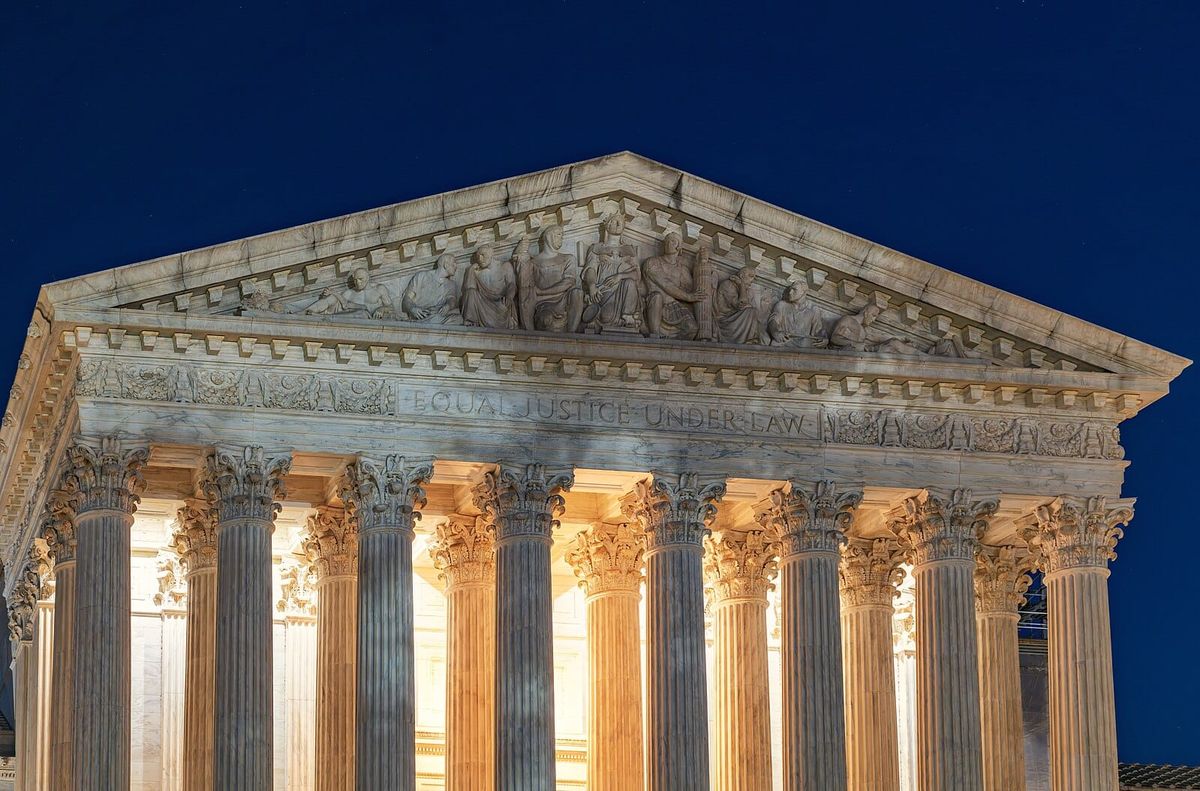
It's safe to say 2025 was not a banner year for the rule of law. Trump decided certain laws didn't apply to him, and the legal system spent the year trying to play catch-up. The Supreme Court, unsurprisingly, showed that it was more than happy to rubber-stamp his transgressions and hand him more power.
That said, there were some positive developments. We saw lower courts routinely push back against Trump's excesses, grand juries often got in the way of his political prosecutions and even the Supreme Court got it right sometimes—such as with the recent ruling that said he could not deploy the National Guard in Illinois.
Chris Geidner, a veteran legal reporter who runs the newsletter Law Dork, is one of the best court watchers out there and was essential for understanding the state of our legal system last year. He says 2025 was a rough year for the law, and this year could be even more consequential.
"We knew that Donald Trump and his administration were going to have less robust guardrails from both within the government and outside of it," Geidner tells me. "I don't know that I expected how quickly we would see how weak those guardrails had become."
Geidner says Trump's second term has clearly been worse than his first term so far. In terms of the Supreme Court, he says the conservative justices have often attempted to "push things off" in important cases—meaning that they have seemingly tried to avoid ruling against Trump in some situations.
"The most clear example of that was the way that both the DOJ and the Supreme Court handled the birthright citizenship case," Geidner says. "It's now been more than 11 months since Donald Trump signed that executive order, and it's never been allowed to go into effect, despite the fact that arguments related to the executive order were already held before the Supreme Court."
Instead of ruling on birthright citizenship, we got a ruling on nationwide injunctions. Geidner says this kind of thing has happened numerous times.
"We still don't have a ruling in the tariffs case, which was one of the first arguments they heard this term," Geidner says.
Those issues are going to loom large this year. The Supreme Court will eventually be deciding on the constitutionality of Trump's birthright citizenship executive order and his implementation of tariffs, which are supposed to be the purview of Congress.
"If [the tariffs case] goes in Trump's favor, that would essentially say that statutes are whatever Trump makes of them," Geidner says. "If they side with the Trump administration on the birthright citizenship case, they're basically saying that the Constitution is whatever Trump says it is."
Obviously, the birthright citizenship case is a big one. Here, the administration is trying to argue that people born on U.S. soil should not automatically receive citizenship. Instead, they say citizenship should depend on whether at least one parent is a U.S. citizen or lawful permanent resident. This runs counter to longstanding readings of the Fourteenth Amendment.
"That would be a reading of the Fourteenth Amendment that has not been the reading of the Fourteenth Amendment since the Fourteenth Amendment was passed," Geidner says. "It's just contrary to text, to precedent and to the way that Congress has operated since the Fourteenth Amendment was put in place."
 Thor Benson
In terms of Trump's political prosecutions, Geidner says the administration is running into problems there because its arguments are, well, bad. That can happen when you put an insurance lawyer with no prosecutorial experience in charge of prosecuting your political enemies.
Regardless, Trump and the DOJ don't need to win these cases for them to do harm to the people they're attempting to prosecute.
"What they've come up with are cases that are completely ridiculous, that past prosecutors have passed on, that grand juries aren't going along with," Geidner says. "You don't want to be caught up in these, because it does disrupt your life, it does cost you money and it does alter your career."
Trump being rebuked by lower court judges is also important, Geidner says, and we've seen this happen repeatedly. There doesn't even seem to be an ideological throughline between the cases where the administration's arguments have been rejected.
"It is definitely the case that the lower courts, the district courts, almost regardless of who has appointed them, are doing a fairly good job of holding the line," Geidner says. "These district court judges are doing an incredible job of handling these cases and setting up the cases to be able to be appealed."
We've even seen these judges start to speak out against recent Supreme Court rulings that have been delivered via the Shadow Docket, which is unprecedented. Geidner says this shows that these judges feel "under attack" and that the Supreme Court isn't helping the situation.
It's going to be another big year for the law, and as Geidner says, we're going to see some consequential Supreme Court decisions that will determine how much power Trump will be able to wield going forward. Let's hope that the answer doesn't end up being "all of it."