How climate change is moving populations
Climate change is becoming increasingly relevant when Americans are making decisions about where to live.

I recently moved to Chicago from New Orleans, and I will say that climate change was one of the factors I considered when I was deciding where I wanted to live. I knew that the hurricanes that hit the South were only going to get worse. New Orleans is especially vulnerable to climate threats, and the summer heat was getting to be too much for me.
Chicago, on the other hand, might not be so bad if it were a bit warmer. It's got access to a huge body of freshwater, no hurricanes, no wildfires, etc. It seemed like a pretty safe bet, and I had heard many great things about the city.
More and more Americans are starting to factor climate change into their decision-making process when they relocate. About 21 percent of Americans say they would consider moving to avoid extreme weather caused by climate change.
In Florida, where climate threats are elevated, 36 percent of residents say they have moved or are considering moving due to extreme weather. Climate change is making it much harder to get home insurance in many areas, including places threatened by hurricanes or wildfires. That can also affect people's decisions around where they're going to live.
Jesse Keenan, an associate professor of sustainable real estate and urban planning at Tulane University, has a new book on climate migration titled "North: The Future of Post-Climate America." Keenan is a leading scholar on this issue, and I reached out to him to learn more about what's going on these days.
"The biggest climate-related factors influencing people’s decisions to
relocate or move are likely associated with the indirect costs of everything
from home and car insurance to housing," Keenan says. "The market economy is rapidly pricing in climate change, and this operates as just another inflationary
measure."
Keenan says climate change typically isn't the main reason people are moving from one location to another—at least for now—but it's becoming increasingly relevant. It's also a bigger factor for some people than it is for others.
"It is certainly part of the decision-making process. As the book discusses, this is
particularly true for older and younger households, for instance, who are
more sensitive to the unexpected costs of disasters," Keenan says. "These age groups are often on a limited budget and are concerned with building a long-term home. For these reasons, they are much more sensitive to the costs and impacts of
climate change."
We used to move for jobs or economic opportunity, Keenan says, but that slowed down significantly over the past couple of decades. He says that's because of dual-income households, student loan debt, the high cost of living in areas with higher wage growth and multiple other factors. We've become "less mobile" in recent years.
"Climate change is uprooting all of these patterns and is either forcing or inspiring a new kind of human mobility," Keenan says.
 Thor Benson
A topic that Keenan specializes in and has written about extensively is called "climate gentrification." This is when gentrification is caused by people trying to avoid the effects of climate change. Imagine upper-middle-class Americans buying up property in a working-class part of town to avoid the growing threat of sea level rise or wildfires.
"As people are on the move, we have sending zones and receiving zones," Keenan says. "Climate gentrification is fundamentally about a change in consumer
preferences that leads to changes in demand for housing."
Climate gentrification can also happen after natural disasters. This is kind of in line with Naomi Klein's "shock doctrine." Essentially, a storm or fire takes out a significant part of a city, and then developers come in and build nice, new homes that the previous residents couldn't possibly afford.
This is certainly something that could happen to New Orleans. We saw it happen after Hurricane Katrina, and it could be worse the next time the city is hit by a devastating hurricane.
"We see climate gentrification happening in all sorts of ways," Keenan says.
"Sometimes, only wealthy people can remain in high-risk zones because they have the resources to pay for the increased costs. In other places, post-disaster housing designed to reduce risks actually has the unintended consequence of raising property values and forcing existing residents out."
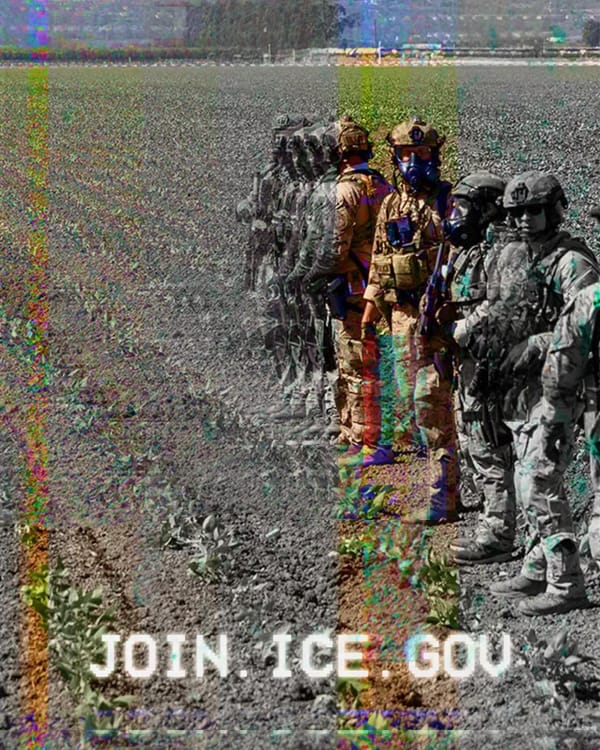
Beyond how people are moving around inside the U.S., we also need to think about how climate change will push people across borders. One of my main concerns when it comes to climate migration is how it could make an already heated debate over immigration issues significantly worse. What happens when there are more people showing up at our southern border because climate change is threatening the region they're escaping?
I fear we might see even more reactionary responses to immigration issues than we're seeing today, which is saying something. Keenan says climate migration is here to stay, and we need to be thinking about how to handle it as best we can.
"Climate migration could easily lead to crowding out," Keenan says. "If we don’t prepare for this movement of people, then there will be an increased backlash against both immigrants and domestic [migrants]."