How ICE turned into what it is today
ICE has always been bad, but it's worse than it's ever been. Radley Balko explains how we got here.

ICE has been a malignant force in American society since it was created in 2003, but it's quite obvious that the agency is worse today than it's ever been. Donald Trump ran on mass deportations as a candidate in 2024, and now the country is seeing what that looks like. According to the polls, voters are not happy with what they're seeing.
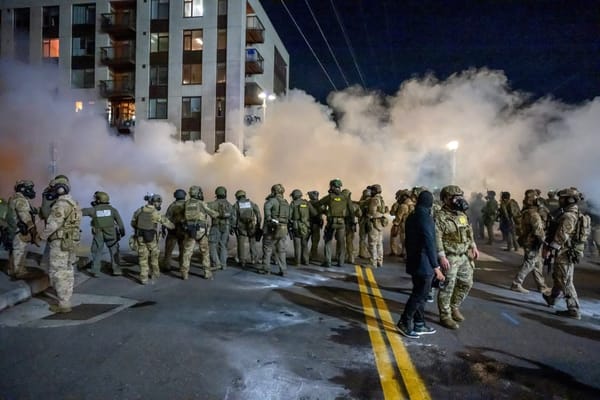
Calls to abolish ICE are increasing, and protests against ICE have featured slogans like "ICE out," "crush ICE" and "fuck ICE." ICE agents have been assaulting people, recklessly deploying tear gas and breaking car windows. They've killed two Americans in the street. They've also been kidnapping children.
If we're going to figure out a solution to the problem that ICE represents, we need to understand how things got so bad. Radley Balko, a journalist who focuses on criminal justice and civil liberties, used to work at the Washington Post and now publishes his writing on Substack and elsewhere. He tells me that ICE has long had its problems, but things took a turn for the worse during Trump's first term.
"In the first Trump administration, one of the first things they did was revoke a policy that prioritized apprehending people with violent criminal records, and they prioritized targeting migrants and people seeking asylum," Balko says. "That was a pretty big and important change. It was also directly contradictory to the rhetoric Trump ran on."
During the Obama years, a lot of immigrants were deported, but Balko says the administration tried to focus on people with criminal records and those who had just recently crossed the border. The administration also had a policy of deporting those who were found to be undocumented immigrants within the prison system.
Balko says there were many issues with immigration enforcement during the Obama years, especially regarding detention, but things certainly weren't as bad as they are now.
"There were always problems with detention [before Trump]," Balko says. "We had really bad detention conditions."
The approach to immigration enforcement was awful during Trump's first term, and the Biden administration rolled back some of those policies when they took over. When Trump came back, he decided to ratchet up the scope and cruelty of immigration enforcement even beyond what he had done the first time around.
"ICE had been running the mass deportation effort, and they basically put Border Patrol in charge," Balko says. "That was a pretty significant change, because Border Patrol is not trained to do internal detainments and arrests. They have a much more aggressive policy at the border."
This was a signal that the administration was taking things to a new level, Balko says. It was when we started seeing operations in Home Depot parking lots, car washes and elsewhere. Border Patrol has a "really long and ugly history of violence, abuse and not holding bad officers accountable," Balko says.
A recent New York Times piece documents how horrid Border Patrol has been over the years, and it's worth a read.
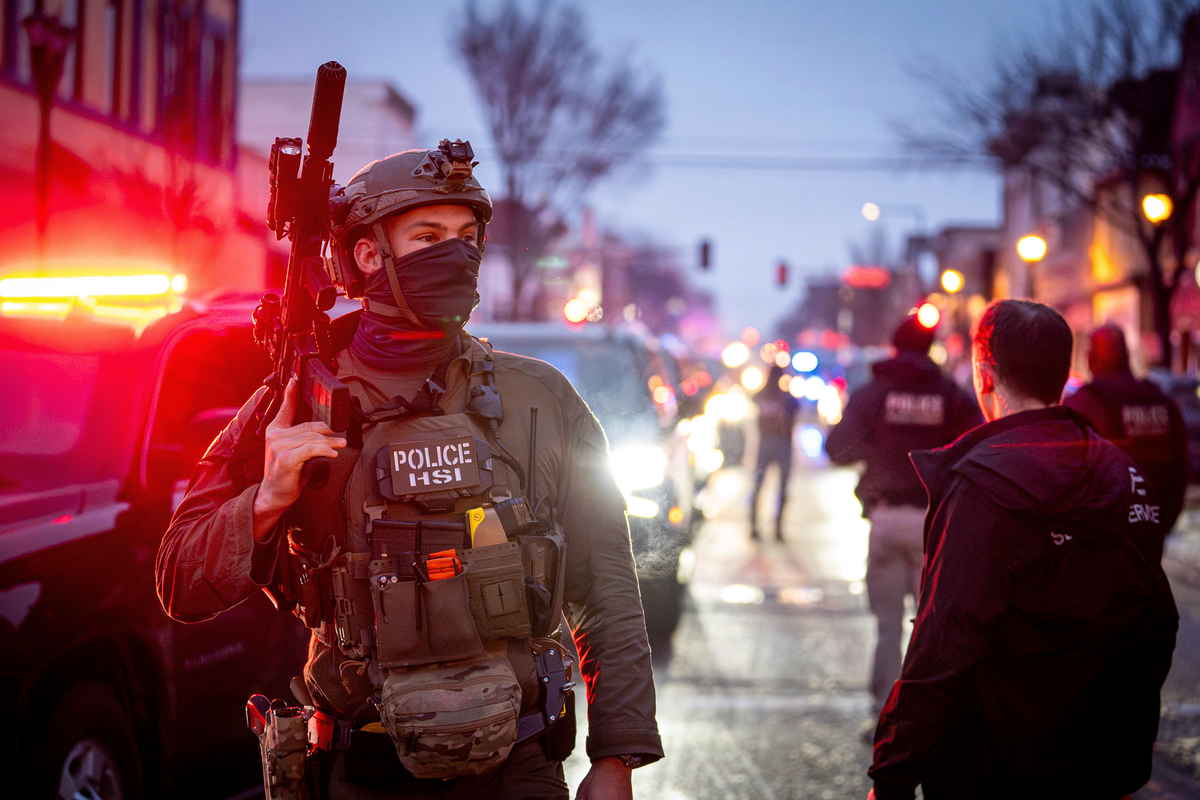
ICE became more antagonistic when Trump returned to office, and we started seeing them wear masks and travel in unmarked vehicles. Balko says ICE never used to wear masks, because that was associated with "totalitarian countries."
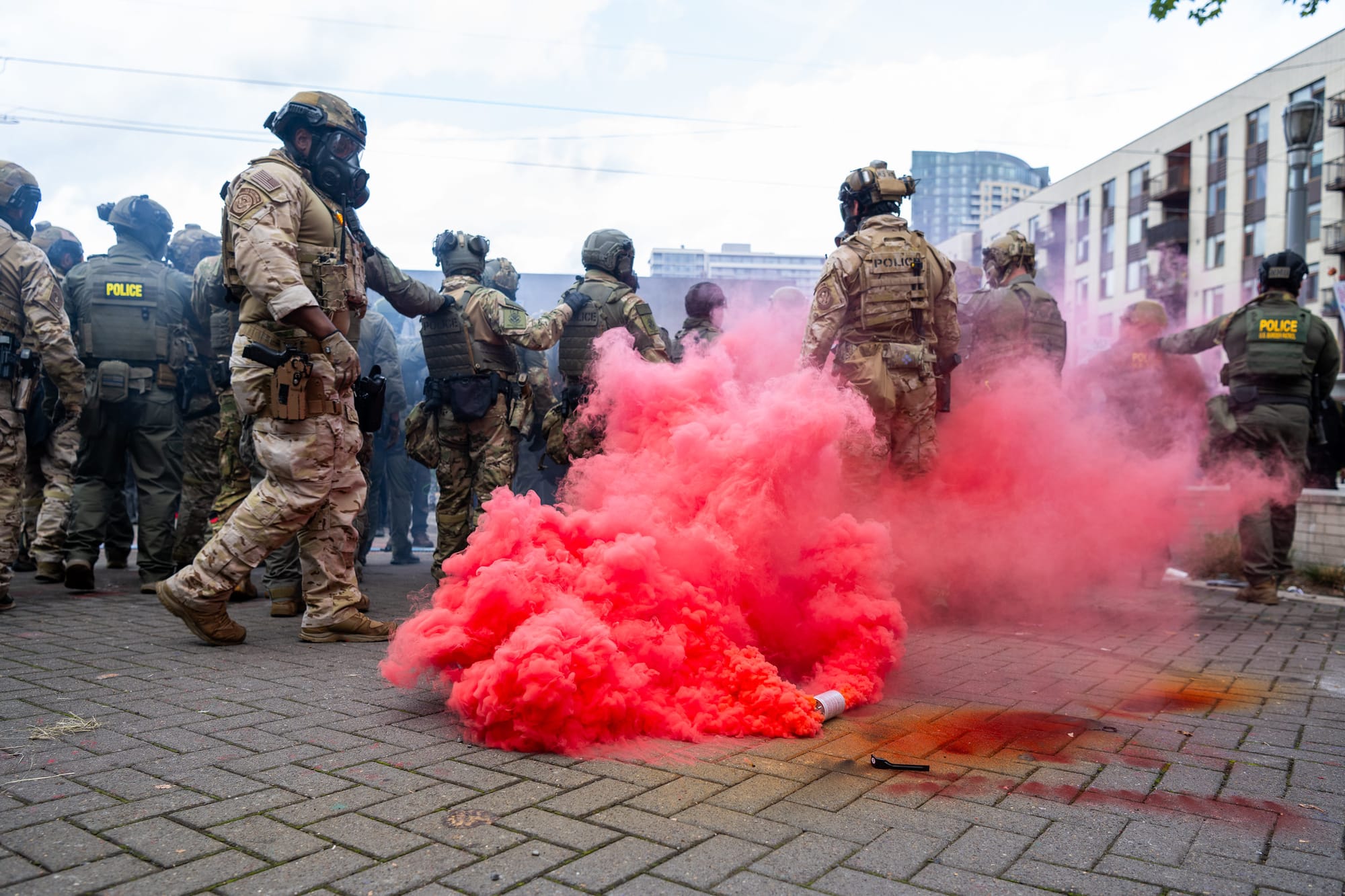
Balko wrote about the militarization of police in his 2021 book titled "Rise of the Warrior Cop: The Militarization of America's Police Forces." He says much of what we're seeing from ICE today is what people like him have been worried about happening for years.
"All of these powers and technologies were warned about, and I think we're really seeing the worst-case scenario in terms of how all of it can be used," Balko says. "This was always the fear."
The changes we've seen with ICE aren't just about policy choices, Balko says. The rhetoric and general approach to immigration enforcement are also important pieces of this puzzle.
"When the president is saying that immigrants poison the blood of the country, and when they say people who record ICE officers are domestic terrorists, and they say you have absolute immunity, that sends a pretty damn clear message," Balko says.
The Trump administration has been working hard to hire more ICE recruits over the past year or so, and Balko says it appears they're looking for people who will be violent and align with their ideology. He says they're hiring people who see videos of immigrants being abused and the disturbing social media posts from the Department of Homeland Security and find those things appealing.
"Whatever the culture was before, the people they're hiring now are going to make it worse," Balko says.
In terms of the calls to abolish ICE, Balko says he feels the agency "should not exist." He says the work that ICE does that should continue, like deporting actual violent criminals, could be done by other federal agencies.
"I think the thing that most of the public supports is deporting people who have been convicted of violent crimes or other serious crimes," Balko says. "Those are investigations and deportations that could be handled by the FBI or Homeland Security Investigations (HSI). I don't think we necessarily need a police force whose job is to round people up and deport them."
There's little chance ICE will be abolished while Republicans control the House, the Senate and the White House, but Democrats can push to take funding away from ICE, reduce its capacity and voice support for getting rid of the agency in the meantime. We shouldn't have a secret police force in America, and it's clear this agency cannot be reformed.