Polls, power and a crisis in the media
A conversation with former Washington Post journalist Philip Bump about the polls, power and his former employer.

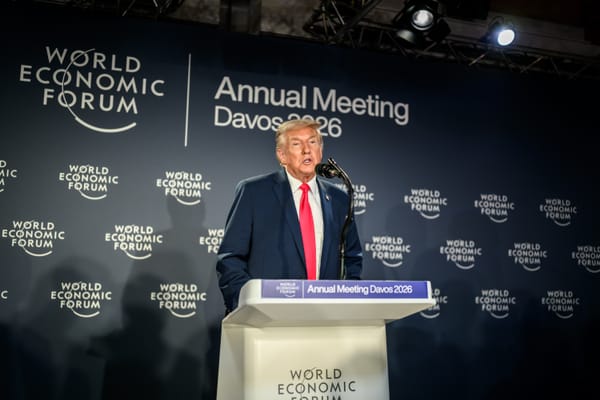
The polls show that Donald Trump's approval rating is historically low. It's currently somewhere around 39 percent. That said, there are many other trends in the poll numbers that are more interesting than his overall approval. For instance, a recent poll from the Pew Research Center found that Trump is losing support for his plans and policies, and the decline is coming from voters within his own base.
"The decline in support has come exclusively among Republicans. Last year, 67% said they supported all or most of Trump’s plans and policies," Pew wrote. "Today, 56% do."
Philip Bump, a former Washington Post columnist who now runs his own newsletter called How To Read This Chart, tells me that he thinks this shift matters because of how it might affect the broader political landscape in the U.S.
"It means that there may be space for Republicans to start saying, 'Well, I'm not sure about what Trump is doing,'" Bump says. "That's important, because Donald Trump holds power not through popular approval but through the intimidation factor that his support among Republicans inspires among Republican elected officials."
One trend in the polls that has gotten a lot of attention is Trump losing the support of numerous groups that supported him at higher numbers than expected in 2024. Bump says he feels this narrative is misleading, because he doesn't think Trump ever really had the support of those voters to begin with.
"I think that narrative is wrong. I think it is wrong to say that Donald Trump created some sort of new coalition of folks who were supporting him in 2024," Bump says. "I think 2024 was an election in which there was a backlash against incumbency. There was a specific dislike among Democratic voters of Joe Biden, specifically young voters, and I think that [the election] was overall powered by inflation and prices."
Bump writes quite a bit about the polls, but he also writes a lot about power for news outlets like MS NOW (formerly MSNBC). He says he likes to look at how power is being wielded within the federal government and outside of it.
"I think the idea of how institutional power is used is something that's been fascinating to me for a long time," Bump says. "Institutional power has really failed to combat the way that Donald Trump is trying to aggregate power."
When Donald Trump took office in 2017, he was able to undermine the establishment of the Republican Party, and he was able to use the Republican Party's power for his own purposes. Bump says he's now doing that in a much broader sense. He's doing it with the entire federal government.
"What he learned during his time in the wilderness from 2021 to 2025 was that there were no real constraints, and that the constraints that he had were self-imposed constraints," Bump says. "In the same way that he had stripped all the power from the Republican Party, he set about doing the same thing with the presidency. So we see Donald Trump trying to seize as much power as he can, trying to seize as much money as he can and institutions bending over and letting him do that."
Everything has become about what Trump wants and what benefits him. Bump says leaders of many of the nation's institutions have failed to constrain Trump's quest for more power, but he feels that the American people are showing that they will stand up to Trump.
"As the effects of that power grab are felt among actual Americans, we've seen actual Americans reaggregate their power, not through the federal government... but just through collective action," Bump says. "We've seen this happen in major cities like Minneapolis."
 Thor Benson
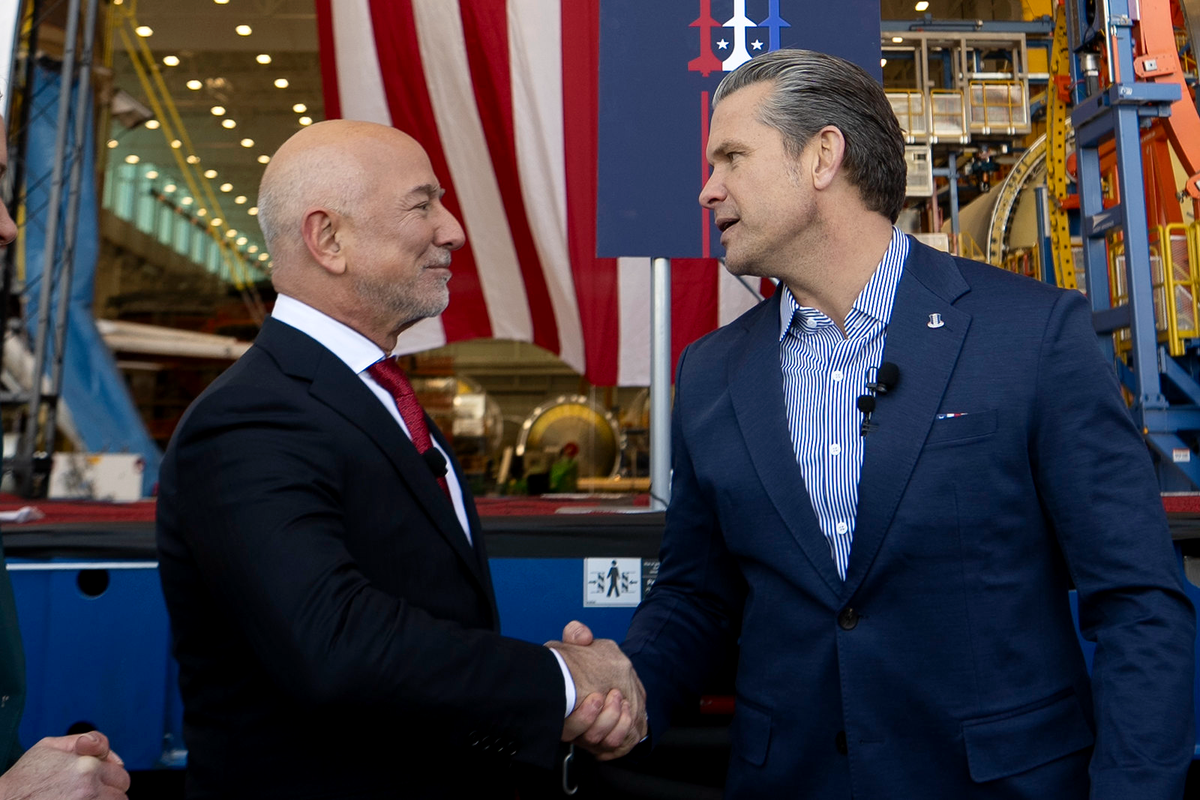
Obviously, someone who has embraced Donald Trump and has helped him in his efforts to consolidate authoritarianism is Jeff Bezos. He's one of the richest men on the planet, and it seems he's more interested in Trump approving his Blue Origin projects than supporting the people who work at the Washington Post. The newspaper that he's owned since 2013 recently cut a third of its staff.
As a former Post employee, Bump says what's happening at the newspaper is "lousy" but not exactly surprising.
"The idea that the Washington Post has to be shredded and become something other than what it has long been in order to be profitable is belied by the existence of the Wall Street Journal, the New York Times and other media outlets like Bloomberg that are able to do traditional journalism in a robust way and make money."
Bezos announced in February of last year that the opinion section of the newspaper would start focusing on supporting "personal liberties and free markets." After the pulled Kamala Harris endorsement months earlier, many readers recognized that this meant the paper was moving to the right politically. This led to a huge number of readers unsubscribing.
"Who knows what comes out of this? There are various organizations that have made the bet that by trying to appeal to more people, which is to say people who don't trust the media and lean to the right, they can build a different sort of business and be successful," Bump says. "It's just not going to happen."
Bump says it's a fool's errand to try to push outlets like CBS News and the Washington Post to the right in hopes of attracting new readers or viewers. He says these publications are seen as liberal and "representing the elites" to people on the right, and they're never going to embrace them.
"I don't know if [Bezos] gets it. I don't know if Bari Weiss gets it," Bump says. "That is simply not a path to profitability."
When Trump came in and said that billionaires didn't need to apologize for their behavior and that he would support them, Bump says that appealed to many ultra-wealthy men like Jeff Bezos and Mark Zuckerberg. He says they feel "entitled to this volume of wealth that is basically unprecedented in human history." Bump thinks something truly changed in Bezos in recent years, and he's not who he used to be.
"I think it's disappointing, because the Washington Post under Jeff Bezos was not always like this," Bump says.
Obviously, if Bezos really wanted to support this important media institution and the people who work there, instead of decimating its staff, he could do that. Bump says it would not cause him any kind of financial strain.
"I went back and calculated it, and guess how much, on average, Jeff Bezos' net worth has increased every single day since he bought the Washington Post?" Bump asked. "It's $48 million a day."