The billionaire threat
Professor Jeffrey Winters explains how the explosion of the billionaire class has transformed American democracy.

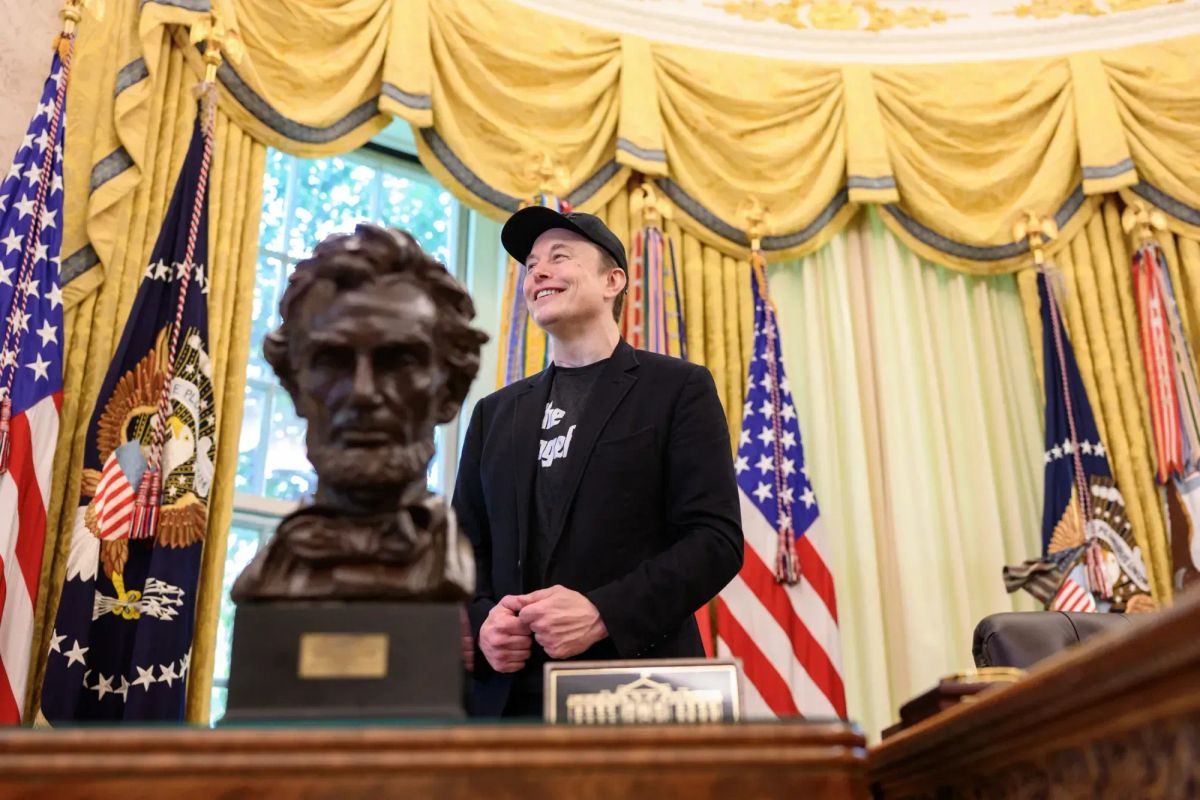
America is currently in what many have called a "second Gilded Age." Over the last few decades, a small cohort of Americans has accumulated a massive amount of wealth. It's actually worse than the first Gilded Age—which took place in the late 19th century—because some of our robber barons are much wealthier, and there are more of them.
The world's richest man, Elon Musk, is currently worth around $839 billion. For comparison, America's former top wealth accumulator, John D. Rockefeller, was worth somewhere around $435 billion in today's dollars.
Being this wealthy brings with it a lot of power, and some have argued that the very existence of these exceedingly wealthy individuals represents a threat to democracy. If they want something done in the government, they can use their money and influence to get it done. If they want to stop something from happening, they can often accomplish that.
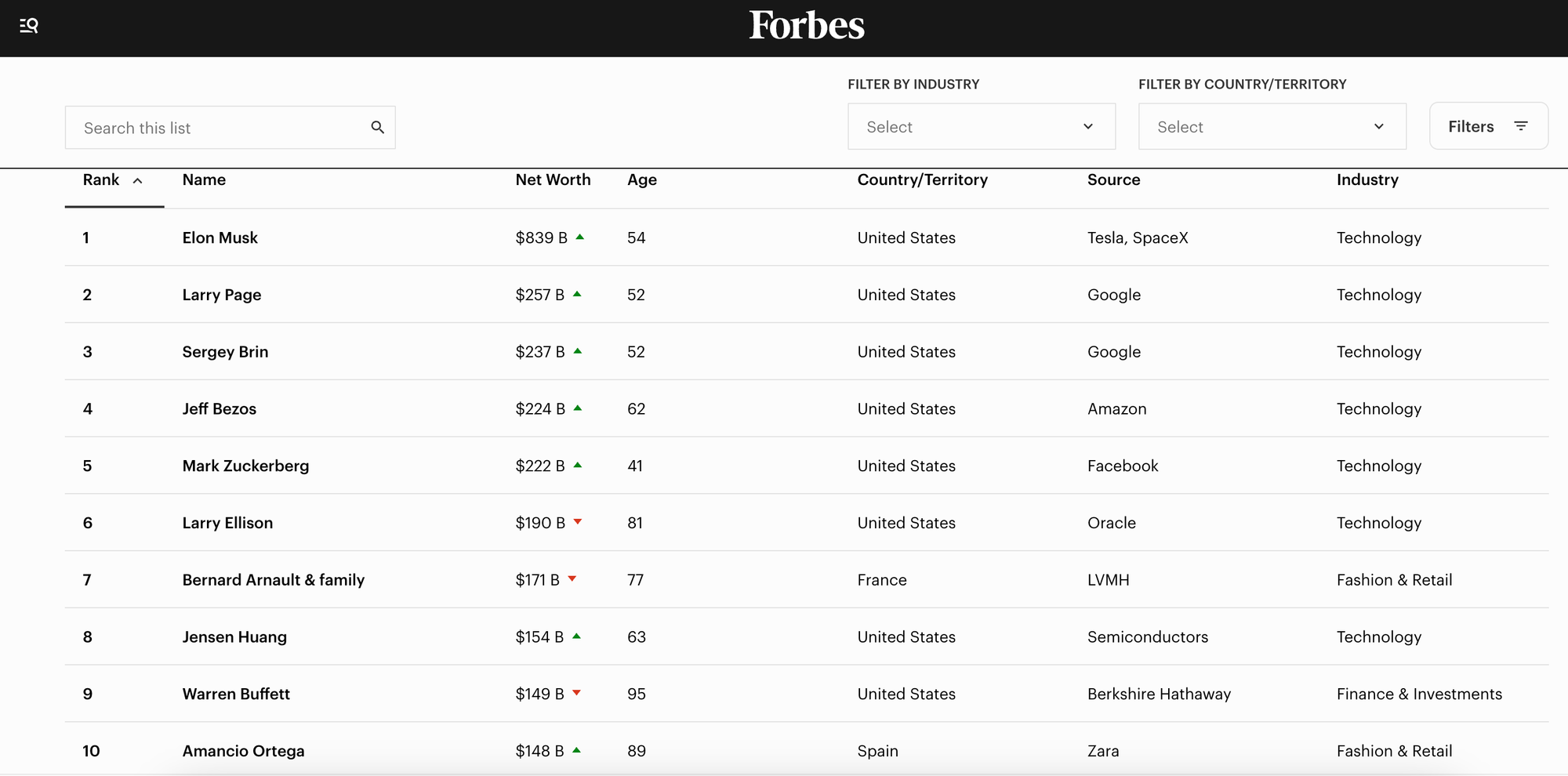
The United States is home to the most billionaires in the world. There are over 900 of them within our borders, and many of them made their fortunes in the tech industry. During the first Gilded Age, there were only a handful of people this wealthy. Today's billionaires are heavily involved in our political system, and as we've seen in recent years, many of them don't like democracy in the first place.
"The period we're in now is probably the most visible era for oligarchs since the Gilded Age," Jeffrey Winters, a professor at Northwestern University who studies oligarchs and elites, tells me. "That's not necessarily because the amount of wealth is greater, although it is, or that the number of wealthy people has increased. It's actually because the systems of constraint on oligarchs—obvious things like campaign finance—have been removed."
Billionaires can fund candidates they like and the Super PACs that run ads against candidates they don't like. Winters says they can also shape our political environment through "intimidation."
"The political agenda is sometimes shaped through intimidation. Oligarchs can single-handedly fund primary challengers to threaten sitting representatives at the state and federal level," Winters says.
Beyond how the ultra-rich influence political campaigns, Winters says there are also clear problems with media capture. We've seen this in how Larry and David Ellison have transformed CBS, and they may soon transform CNN, HBO and other networks. Of course, Jeff Bezos has been remaking the Washington Post, as well.
Billionaires fund candidates, upend media properties and control the places where people get most of their information—social media. Elon Musk, Mark Zuckerberg and now the Ellisons control the algorithms that deliver us that information and can make adjustments to reshape people's understanding of the world. Musk, for example, has seemingly tried to push users to the right.
All of this represents a threat to democracy, and it acts as a barrier to the future many of us would like to see. The greed of these extremely wealthy individuals is doing quantifiable harm to everyday Americans.
 Thor Benson
“Today, suffrage is universal—almost everyone is eligible to vote. And yet we are a dramatically more unequal society than before. The obvious puzzle is: why are we more free and more unequal?" Winters says. "The answer is that power is distributed in different ways. We have a democracy of one person, one vote, but it exists alongside an oligarchy where resources are concentrated in very few hands.”
Winters says that researchers have found that since 1975, over $50 trillion has shifted from the bottom 90 percent to the top 1 percent. He calls this a "mind-boggling" statistic, and it manifests as stagnation for the average household.
In terms of what we should do about these problems, Winters has a few ideas. First, he says we need to overturn Citizens United, which would probably require a constitutional amendment. But there are easier lifts, too.
"We need to address the 'wealth defense industry'—the thousands of accountants and lawyers whose sole purpose is to ensure progressive taxation fails," Winters says. "The ENABLERS Act is a vital solution because it requires these financial players to report suspicious activity and maintain the same compliance standards as banks."
We also need to revive the Corporate Transparency Act and start talking about a wealth tax, Winters says. Some have proposed a version of an alternative minimum tax. There are many ways we can rein in the billionaires, restore democracy and make this a country that works for working people. Unfortunately, we'll probably have to wait until the president isn't a corrupt oligarch.