Will we need another Reconstruction?
A historian explains what happened during Reconstruction and the lessons we can take from that era.


Let's take a little break from the present and spend some time in the past and the future. When we talk about what will become of this country after Donald Trump's reign has ended, there are many ideas for what might be the proper path forward. People will say we need to prosecute members of this administration and rebuild our institutions, for example. One thing that's often said is that so much will have been broken that we'll need another Reconstruction.
This has been proposed by some scholars and other political observers. Considering many Americans are not intimately familiar with the Reconstruction era, I thought it would be a good idea to take a look at what happened then and what attempting something similar in the future might look like.
Reconstruction was a period between 1865 and 1877, after the Civil War, when the country was contending with the abolition of slavery.
"Reconstruction was an effort by the United States government to figure out, with input from the American people, what kind of nation would emerge from this war and the abolition of slavery," Kate Masur, a professor of history at Northwestern University who focuses on the Reconstruction era, tells me.
The early Republican Party had to figure out how to use the law, the Constitution and force to "try to remake the nation in the way that they thought was best," Masur says. During this period, Congress was able to pass three amendments to the Constitution.
"The 13th Amendment abolishes slavery and gives Congress the power to enforce the abolition of slavery," Masur says. "The 14th Amendment affirms birthright citizenship and guarantees certain basic civil rights. The 15th Amendment bars racial discrimination in voting."
Masur says these amendments were so significant that this was almost seen as a "refounding of the nation." Though the Declaration of Independence had stated that "all men are created equal," this was the first time the country was going to really start moving in that direction.
"This puts the federal government into the lives of everyday Americans on the side of individual rights in a way that it had never been before," Masur says.
The idea was to create a true multiracial democracy. Beyond amending the Constitution, certain laws were also passed, such as the Civil Rights Acts of 1866, 1870 and 1871. The Department of Justice was created in 1870 to enforce these new laws.
"They needed a bigger federal law enforcement apparatus to enforce these newly created federal rights of free people," Masur says. "To enforce them, you needed people on the ground. You needed federal marshals. You needed federal district attorneys."
President Andrew Johnson, who was in office from 1865 to 1869, was famously not an ardent supporter of this emerging multiracial democracy. However, Masur says Congress was able to do a lot to move things forward despite his resistance. When Ulysses S. Grant became president in 1869, his background as a celebrated Union Army general and his commitment to enforcing federal law helped ensure that Reconstruction policies were actively implemented.
"The idea that the federal government is going to enforce this bar on racial discrimination in the right to vote, not only against southern states but against a lot of northern states, is a very big deal," Masur says.
Of course, much of the South didn't like what it was seeing. There was fierce resistance to the changes that were happening, and the KKK was formed to push back against it. The war was over, but a new kind of war had begun.
 Thor Benson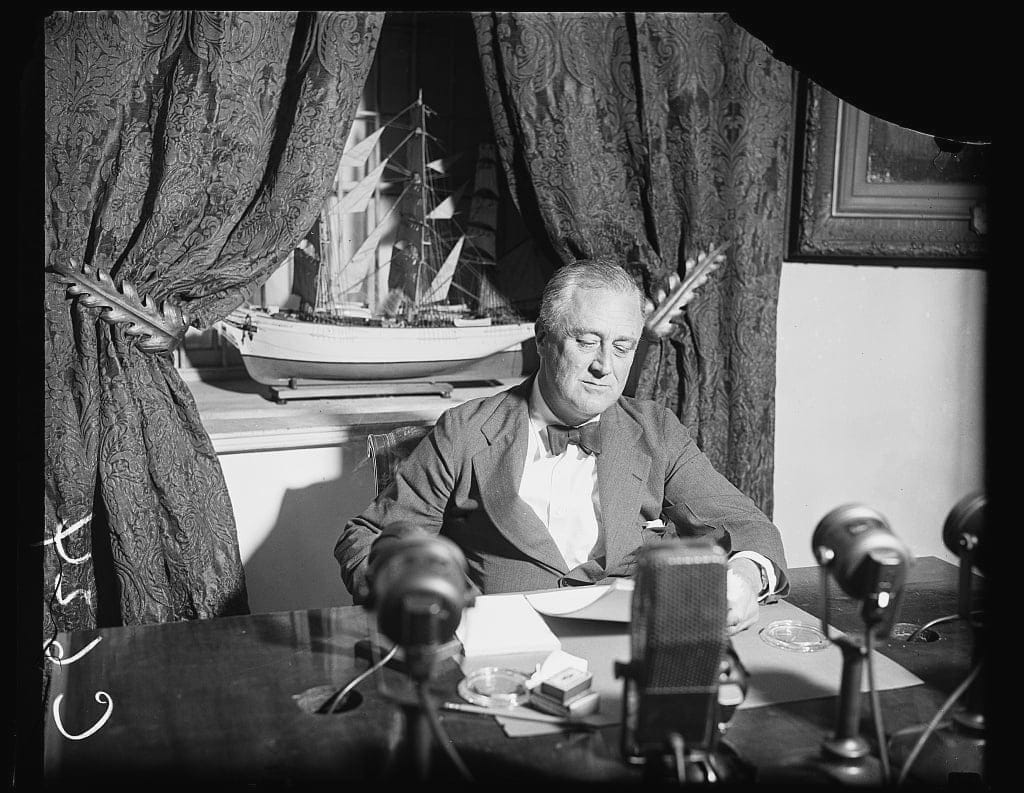
"Resistance by Southern white people is multifaceted. Many of them had fought the war to maintain slavery, and they were not happy to give up the institution of slavery," Masur says. "There's a huge amount of violence against black people at the local level immediately after the war... There's political violence after black men get the right to vote. In 1867, in the South, there were organizations designed to intimidate African Americans and their white allies into not voting."
Ultimately, white Americans in the South who opposed Reconstruction were able to put an end to it. What followed after that was what we now call the Jim Crow era.
"Reconstruction was overthrown by Americans who opposed democracy," Masur says. "Had so many Americans not mounted such an effective opposition, this would have been the new legal framework going forward, and there never would have been Jim Crow."
Reconstruction was a time of progress, and there were undeniably significant successes, but fierce resistance to change was able to prevent it from being what it could have been. That said, there are still some things we can learn from this period.
"Republicans had a majority in Congress for a number of years, and they took advantage of it. They came together to pass really significant, bold legislation," Masur says. "The Democrats opposed just about every inch of it, and the Republicans didn't care much, because the Democrats were the minority. So I think some of the boldness of what they tried and the democratic vision of what they tried is worth emulating."
Masur says the lesson of Reconstruction is that you have to "strike while the iron is hot" and be aggressive, because you might not be in power for much longer. There's always another election around the corner. A major topic of debate after the Civil War was whether the Confederates should have been prosecuted, and that's also worth thinking about today.
"I think people are talking about not just what do you do about the people who broke the law, who violated the Constitution, but how do you look forward and create a new, better country?" Masur says. "A lot of work is required—both to safeguard against bad things happening again, but also—what does a better society look like?"
This era of bold change is worth looking at, Masur says, but she thinks it's also worth looking at the New Deal era. That was a time in American history when transformative changes occurred, but those changes really stuck around.
"Just in terms of really trying to think big about what kind of a democracy you want to have, Reconstruction is a good model," Masur says. "I think the New Deal is a better model for what will last and will stand up to challenges going forward."
When the Democrats are back in power, it will be important for them to act quickly to not just fix what is broken but to reimagine our institutions. They should be bold and try to ensure that what they're creating will last. They should also hold those who violated the law accountable. They will have to simultaneously address the past and build the foundations of the future.