Republicans are sprinting back to Jim Crow
The Supreme Court recently gave Republicans a chance to realize their racist dreams, and they're taking it.

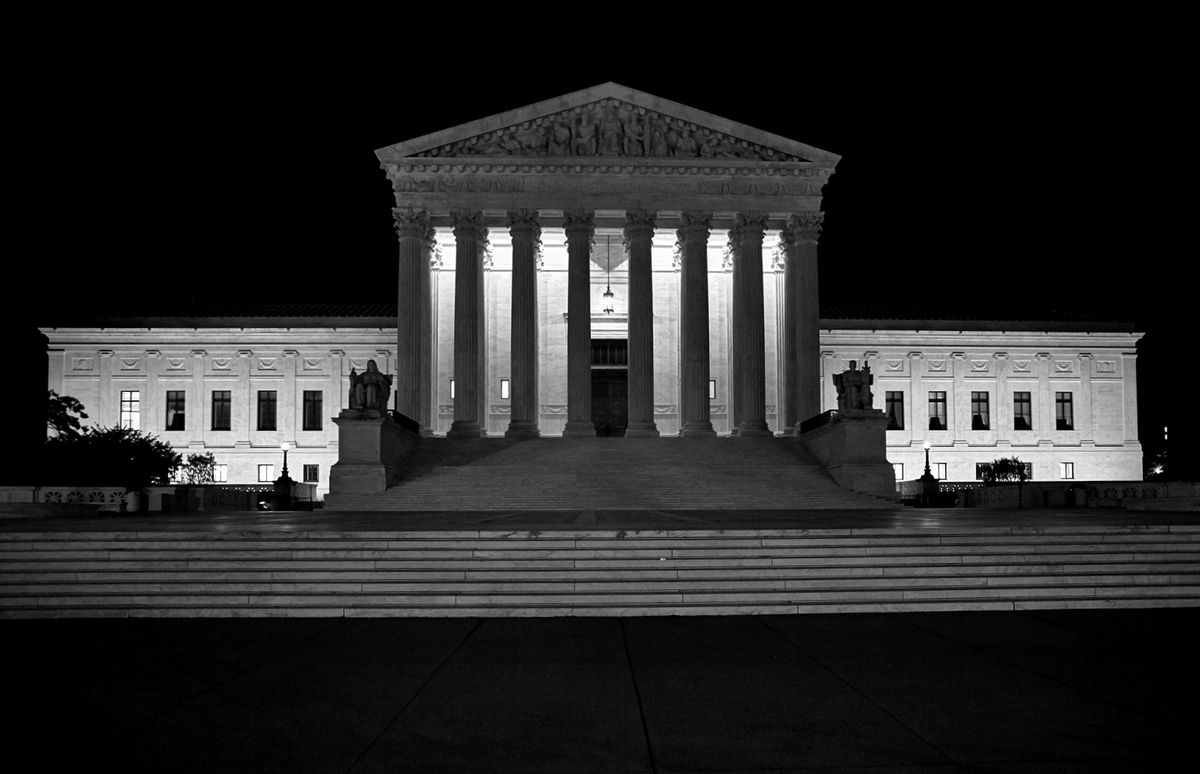
The Supreme Court recently delivered what some are calling its final blow to the Voting Rights Act, and now Republicans in the South are rushing to dismantle majority-black districts in their states. The ruling in Louisiana v. Callais, which came down on April 29, effectively opened the door to eliminating districts designed to ensure minority representation, treating the South’s racist history of disenfranchisement as a thing of the past.
"Minority voters will now be left with a diminished voice in American politics, rolling back half a century of steady progress toward racial equality in voting practices," reads a Slate article about the decision.
Many are calling this a kind of return to Jim Crow or even the Reconstruction era. At Mother Jones, the decision was compared to Plessy v. Ferguson, which enshrined Jim Crow laws.
"The Roberts court is in many respects a neoconfederate court, and it repeatedly applies the tactics and ideas of the 1880s and 1890s court, whose members likewise could not abide a robust vision of equality," the article reads.
Republican lawmakers in Southern states like Louisiana, Alabama and Tennessee have been moving as quickly as they can to eliminate majority-black districts ahead of the midterms to increase their chances of holding onto the House. Many of them have not been shy about what they're doing.
Madiba Dennie, deputy editor of the legal news outlet Balls & Strikes and author of "The Originalism Trap," tells me that the author of this Supreme Court opinion, Samuel Alito, essentially declared that racism is over.
"Alito tells us that racism is over now, so the VRA is unnecessary. The immediate reaction of Republican lawmakers in states like Louisiana, Tennessee and Florida suggests otherwise," Dennie says. "Red states were all too ready to racially gerrymander as soon as the Court gave them permission. To be clear, whether the VRA is still necessary is a policy decision that the Court is neither qualified nor authorized to make in the first place, but the immediate rush to gerrymander also underscores that the Court made the wrong decision."
 Thor Benson
Dennie calls what's happening a retreat from the Civil Rights Movement and Reconstruction, and she says it shows that this court is not basing its opinions on the law or the Constitution, but rather on its own partisan ambitions.
"They love talking about how important it is to give the words in a law the same meaning they would have had when written. There is absolutely none of that in Callais, because the Republican justices' desired outcome is irreconcilable with any faithful application of either the Constitution or the text of the Voting Rights Act," Dennie says. "Callais is the latest decision illustrating how conservatives only value originalism to the extent that it allows them to disguise their own bigoted policy preferences as objective legal analysis."
Because of this decision by the Supreme Court, white Republicans who have long despised the Voting Rights Act and wanted to exercise full control of the South will be able to realize their hate-filled dreams. While Chief Justice John Roberts complains about people treating the Court as a partisan body, he's giving these Republicans everything they've ever wanted.
This isn't the end of this fight, though, and Dennie suggests how we can think about what we're dealing with here going forward.
"This is hardly the first time the Supreme Court has unreasonably constrained the liberatory potential of the Reconstruction Amendments, and history can provide some useful examples of ways other branches of government and the general public pushed back," Dennie says. "The Court is not the sole legitimate arbiter of what the Constitution means. And any path to multiracial democracy will require asserting an alternative, inclusive constitutional vision and reforming the Court."