Abraham Lincoln's war against the elites
Historian Louis Masur explains how Abraham Lincoln pushed back against the rich and powerful.

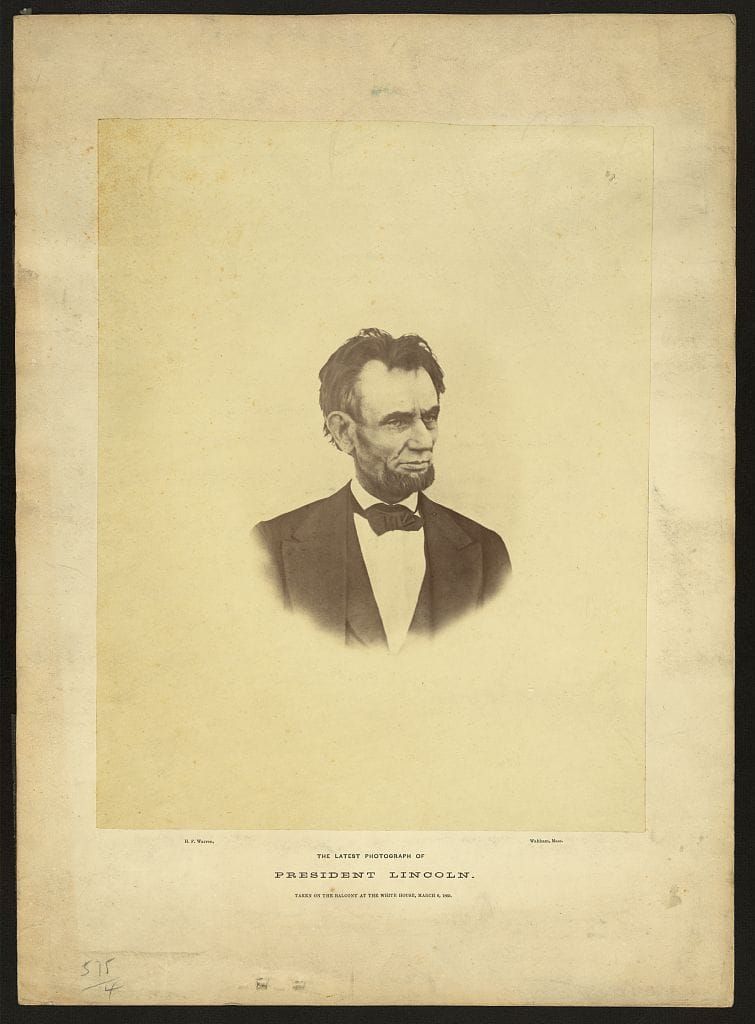
Abraham Lincoln is thought of as a mild-mannered institutionalist who reluctantly led this nation through the Civil War. He's not really thought of as a passionate idealist or a trailblazer, but if you take a closer look at Lincoln's political career, you'll find that he was closer to those things than we give him credit for.
Lincoln's political rise coincided with the death of the Whig Party and the birth of the Republican Party. In the 1850s, the northern and southern Whigs came to a crossroads over the issue of slavery, and the party started to fall apart. Lincoln, a Whig himself and an opponent of slavery, emerged from this period as the face of the northern Republicans.
"Political parties always have a spectrum within them, and the Whig Party in particular begins to collapse over the issue of slavery and the expansion of slavery," Louis Masur, a distinguished professor of American studies and history at Rutgers University, tells me. "The Whigs split into northern and southern Whigs, and ultimately the party collapses, and then Lincoln is at the forefront of the emergence of the Republican Party."
Republicans who were not aligned with the political establishment and wanted to make major changes in the country started being elected to office. In terms of Lincoln's ideology, he presented himself as a man of the people and an opponent of the rich, slave-owning class of the South.
"There's a certain amount of suspicion of political elites," Masur says. "He believed in serving the people."
As Princeton historian Matthew Karp has written, the Republican Party explicitly spoke out against the "oligarchy of slaveholders.” Karp describes what was happening at this time as a "political revolution."
“Our object is to overthrow the Slave Power of the country.”
—Massachusetts Senator Henry Wilson
Masur says Lincoln blamed the Civil War on the "elite, slaveholding aristocracy," and he felt that they were pulling regular people in the South into something that wasn't really about them or their interests. In his July 4th, 1861, message to Congress, Lincoln portrayed the rebellion as a threat to democracy and the American way of life.
"This is essentially a people's contest," Lincoln said. "On the side of the Union, it is a struggle for maintaining in the world that form and substance of government whose leading object is to elevate the condition of men; to lift artificial weights from all shoulders; to clear the paths of laudable pursuit for all; to afford all an unfettered start and a fair chance in the race of life."
As the Columbia University historian Eric Foner has written, the 1850s were a time when the United States was industrializing, which caused great anxiety among the working men of the North. The Republican Party tapped into this and became champions for the working man. Lincoln also embodied these ideals.
"Labor is prior to and independent of capital. Capital is only the fruit of labor, and could never have existed if labor had not first existed," Lincoln said in his December 3rd, 1861, address to Congress. "Labor is the superior of capital, and deserves much the higher consideration."
 Thor Benson
Masur says that Lincoln believed that the problem with elites and embedded power structures is that they exist to prevent the people from rising to their potential. He believed in empowering the working man so that he could meet his potential.
Lincoln walked the walk, too. When he was campaigning for president in 1860, he supported the Lynn Shoeworkers Strike. He said he was "glad" to see a system of labor prevail "under which laborers can strike when they want to, where they are not obliged to labor whether you pay them or not."
All of this is to say that Lincoln and early Republicans were part of an insurgent political movement that fought for the common man in ways that are often forgotten. I think that we can learn something from this period, because it is clear that many people today are looking for leaders who will push back against the establishment and represent their needs.
I don't think we're going to see a major political party disappear, as the Whigs did, but perhaps the left is witnessing a similar kind of insurgency. Perhaps we'll see more and more politicians who want to fight for working-class people, rather than corporations and special interests, elected to office. Those politicians could bring about a sea change within the Democratic Party.
"Ultimately, Lincoln believed in serving the people," Masur says. "As he says at the end of the Gettysburg Address, it's a government of the people, by the people and for the people."