Hallucinations and legitimate threats
A breakdown of how I'm viewing AI these days as someone who's been covering the technology for years.

Though most of the country has only recently gotten used to grappling with the complexities of AI systems and what they mean for society, that is not the case for me. As a longtime tech journalist who's been thinking about AI for most of my career, this is just a different version of something I'm familiar with. Even so, I still sometimes find the situation we're in pretty confusing.
There are a lot of new issues to tackle here, because the technology has become present in our daily lives in ways it wasn't, as much, when I was writing about AI threats 5 or 10 years ago. Things are also moving pretty quickly.
All of that said, I'd like to dive into what I see as the real threats that AI poses today and the imagined threats that I think are being propagated by potentially delusional people. Keep in mind that I'm looking at where threats stand today, not where we might end up in several years, which I couldn't accurately depict right now.
The big threat we keep hearing about, of course, is that AI is going to wipe out humanity. Maybe you've seen the headlines about the Anthropic researcher who left the company and said there's a chance AI could kill us all "by the end of the decade." He's not alone, either. These types of claims have been made by many in the tech community.
The idea here isn't so much that AI becomes superintelligent, decides that humans are bad and then decides to kill all humans. There are a couple of scenarios that are more in line with this way of thinking. The first is that AI becomes superintelligent and then ends up killing humans on its way to a goal, because it's indifferent to us. The second is that AI decides its goals are very important, and humans disabling this AI before it achieves its goals would be unacceptable, so it starts doing things that would lead to mass death.
As things stand, I am not too worried about this hypothetical sequence of events. While AI systems have shown they will sometimes do things we don't expect and go to somewhat extreme lengths to accomplish goals, I don't think we're currently at risk of a situation where an AI decides that introducing a bioweapon or something like that to achieve a goal is likely. That's paranoid thinking. I've seen no evidence that we're approaching that reality.
I think it's worth reading this New York Times piece by computer science professor Cal Newport that touches on the origins of some of these theories.
Another big claim that's been made by members of the tech community and the leaders of the nation's top AI companies is that AI will soon replace the vast majority of office workers. OpenAI investor Vinod Khosla, for example, has said that AI will be able to do 80% of all jobs by 2030.
While I've long been worried about AI taking people's jobs, and I still think that is a legitimate threat, I think these claims of massive job displacement are overblown. Before we were able to actually witness how AI tools would be incorporated into the business sector, I was more open to predictions of large job losses. At this point, I think we are still on a path to many jobs being lost, but I don't think it's going to be the majority of jobs anytime soon.
We've seen that corporations that have adopted AI to fill jobs have often found it to be more expensive than keeping human workers, and I don't think the costs are going to suddenly plummet to a point where it'll make sense for everyone to confidently make the decision to eliminate most of their employees.
When it comes to what I am most worried about right now regarding AI threats, I think my concerns are more grounded in reality. We do not need to speculate or make bold predictions to see the dangers associated with this technology. If we remain focused on the right things, we can see exactly where the use of AI could go very wrong.
 Thor Benson
I'm always worried about the spread of disinformation and how new technology can be used to manipulate large segments of the population, and obviously AI poses a real threat there. The technology has lowered the barrier for creating convincing fabricated news reports, images and videos. It can do these things faster and better than what we've previously witnessed as a society. I think we absolutely need to stay focused on the problem of AI-generated disinformation and pass laws to reduce its spread.
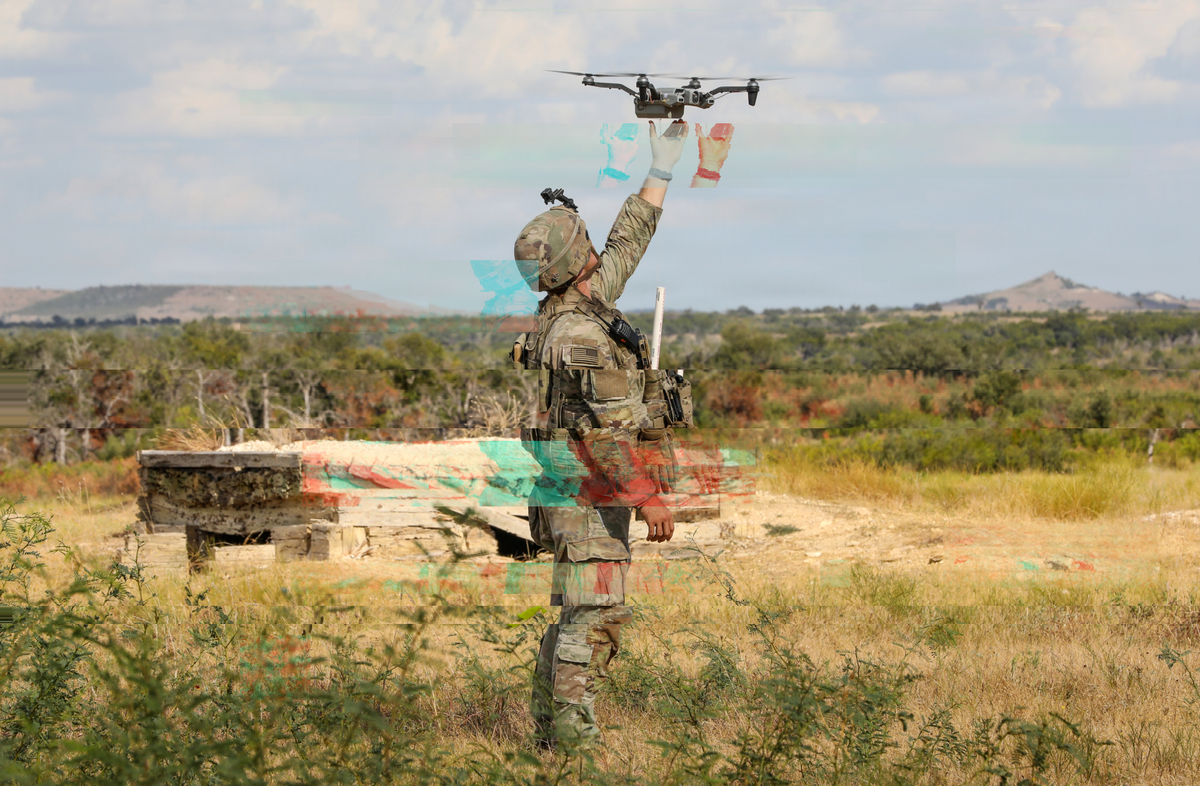
As I've written about in the past, the use of autonomous weapons systems on the battlefield is another serious threat, and it's a growing one. Every time I write about killer robots, as they're called, it seems the Pentagon and defense contractors have made greater strides in getting us to a situation where drones and other robots will be able to kill people with little, if any, human involvement.
The possibility of these robots being used to commit terrible acts or humans losing control of them are things we should be considering. Personally, I think completely autonomous weapons should be banned worldwide.
Many people seem to be worried about AI being used to create bioweapons—essentially pathogens engineered to kill large numbers of people—and I also think we need to be vigilant about that threat. We don't want some lab somewhere using AI and CRISPR to generate a virus that could wipe out millions of people. I think that would be bad.
While I'm not of the opinion that AI will soon wipe out a large swath of humanity, I do think the idea of AI interfering with critical infrastructure is a problem worth considering. I can imagine a situation where, for example, an AI system that's connected to the power grid in a region decides that accomplishing a goal requires shutting down the grid for a significant period of time, which would obviously cause major problems and could lead to many deaths.
Finally, as someone who's long focused on psychology and sociology in their work, I do fear what might become of us if we become too reliant on AI tools. I am also thinking about how AI tools could negatively impact our relationships and our perception of the world. I think there are clear problems that could soon present themselves as people start automating too much of their lives and start becoming even more insular than they've already become.
There are many reasons to be concerned with how AI could impact humanity, but it's not always easy to determine what's real and what's not. There's so much information constantly being jettisoned in our direction regarding AI that it can be difficult to make sense of what's happening. Hopefully I've helped clarify some of what we're looking at here. Now let's see if the AI bubble pops and we end up in a recession.