Living on the edge
Our democratic system feels very fragile right now.

Most of our articles are free, but this one is for paid subscribers. The first section can be read by everyone. Subscribe or upgrade here for full access.
We've been discussing America's potential slide into authoritarianism and the death of democracy since Donald Trump's first term, and we've debated where this country fits on the democracy spectrum during that time. America became a true democracy in 1965 with the passage of the Voting Rights Act, spent some decades in that position and it's been a flawed democracy for at least the past decade.
Now, some of the top authoritarianism experts in the world are arguing we've moved off of the democracy scale. Perhaps we're not a democracy at all anymore. The political scientists Steve Levitsky of Harvard University and Lucan Way of the University of Toronto argued in a recent paper that the U.S. is now living under "competitive authoritarianism."
Competitive authoritarianism isn't full fascism. Levitsky and Way don't even argue we've moved that far into competitive authoritarianism. However, it is the first time they've definitively stated that the U.S. is no longer a democracy.
Levitsky and Way introduced the term competitive authoritarianism in 2002. At the time, they were talking about far-off countries like Serbia, Kenya and Peru. More recently, you'd use the term to describe Hungary under Viktor Orbán or Turkey under Recep Tayyip Erdoğan. It is a form of government where many of the hallmarks of democracy still exist, such as elections, but the leader of the country has consolidated power around themselves and disempowered the opposition.
Not everyone agrees that we've crossed this line into competitive authoritarianism yet, but even if we haven't, we appear to be very close to crossing it. I spoke with Levitsky about why he thinks we're over the line for the newsletter Public Notice.
"In a reasonable democracy, citizens should be able to engage in legal, constitutional, peaceful acts of opposition, whether it's writing an op-ed, giving money to an opposition candidate, running for office or criticizing the president, without fear of government retribution," Levitsky said. "It's only in authoritarian regimes where citizens have to think twice about engaging in legal opposition... Obviously, this is not Russia. People are not jailed, exiled or killed for expressing opposition. But over the course of 2025 in particular, there were many, many political actors in the United States who credibly feared some significant price for speaking out against the government."
He noted that universities and law firms were targeted by this administration. Media companies were sued and threatened. Investigations into Trump's political opponents were opened. All of these actions resemble what happens under competitive authoritarianism.
 Thor Benson
"Citizens who protested against ICE in early 2026 could legitimately be worried that they would be beaten, even shot, by security agents," Levitsky said. "But in democracies, you do not have to think twice about opposing the government. It was a pretty widespread phenomenon that many people spoke out anyway, of course. But many Americans began to silence themselves or self-censor themselves in 2025 and early 2026."
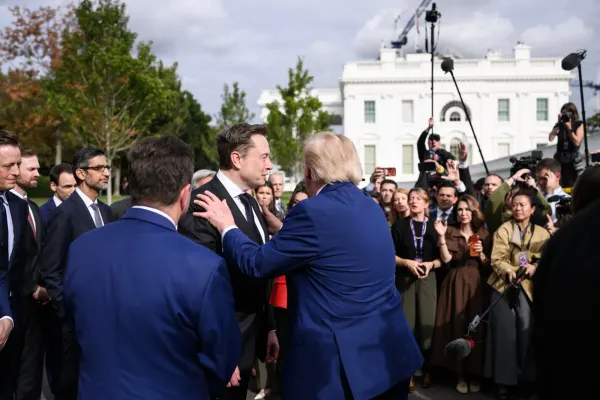
The things that made America a flawed democracy before Trump arrived on the scene have also gotten worse. That includes money in politics, mass surveillance, the media environment and more. The richest man on the planet, Elon Musk, looks like he'll personally spend around half a billion dollars on the midterm elections this year. The tech bros trying to sell us AI and other products are massively increasing their surveillance capabilities. AI is spreading even more false information on social media than we were already experiencing.